“Fairy tales are more than true: not because they tell us that dragons exist, but because they tell us that dragons can be beaten.” ― Neil Gaiman
Friday, June 21, 2013
Q & A with Vikki Vansickle
Wednesday, June 19, 2013
Summer Days, Starry Nights by Vikki VanSickle
Then Gwendolyn Cate arrives – Mimi’s solution to all their problems. Gwen is a ballet dancer in training from Toronto, come to shine things up a bit. But Reenie’s memory of the fairy-like girl turns out to be just that: a memory. At first, Gwen seems like another person entirely, keeping secrets and not letting Reenie in. Gwen is friendly, but not as friendly as Reenie wants her to be. She wants a best friend, not an older sister. So Reenie decides to take matters into her own hands and figures out a way to simultaneously draw out Gwen’s secrets, make everyone happy, and save Sandy Shores. Only things don’t quite go as planned.
-Kristen
Thursday, June 13, 2013
featured June releases: *The Oathbreaker's Shadow* and *The Moon and More*
In the land of Darhan promises are bound by magic, tied into knots, and worn with pride. Those who break them are physically scarred, cast out into the desert, and tormented by vengeful shadows of their treachery. So when Raim agrees to give his life as a warrior to the future Khan, he knows that he must honour his word until the day he dies.
But on the night he takes his vow, Raim accidentally breaks a mysterious promise that he has worn since the day he was born. Yet how can he break an oath he has no memory of making?
With the dark mark of a traitor seared into his skin, and forced into exile, Raim flees on a journey that will reveal the true meaning of honour, and uncover truths that will change his world for ever.
Luke is the perfect boyfriend: handsome, kind, fun. He and Emaline have been together all through high school in Colby, the beach town where they both grew up. But now, in the summer before college, Emaline wonders if perfect is good enough.
Enter Theo, a super-ambitious outsider, a New Yorker assisting on a documentary film about a reclusive local artist. Theo's sophisticated, exciting, and, best of all, he thinks Emaline is much too smart for Colby.
Emaline's mostly-absentee father, too, thinks Emaline should have a bigger life, and he's convinced that an Ivy League education is the only route to realizing her potential. Emaline is attracted to the bright future that Theo and her father promise. But she also clings to the deep roots of her loving mother, stepfather, and sisters. Can she ignore the pull of the happily familiar world of Colby?
Emaline wants the moon and more, but how can she balance where she comes from with where she's going?
Sarah Dessen's devoted fans will welcome this story of romance, yearning, and, finally, empowerment. It could only happen in the summer.
Tuesday, June 11, 2013
Book Links
Maggie Stiefvater is holding an art contest to win an ARC of the The Dream Thieves. Go enter!
Check out the first few film stills of the Divergent movie over at Veronica Roth’s blog. (And if you haven’t seen the cover reveal for Allegiant yet, it’s here.) Oh, here she is again with Leigh Bardugo (Siege and Storm) talking about badass heroines.
Similarly, here's an author-editor interview with Sarah Dessen and her editor, Regina Hayes.
Two intriguing articles, one on female sexuality in YA fiction and the other on the lack of female road narratives and why it matters.
Also, the LAMBDA award winner for the YA Category was just announced: Aristotle and Dante Discover the Secrets of the Universe by Benjamin Alire Saenz.
And the Seattle Public Library just broke the world record for their Domino Book Chain:
Monday, June 10, 2013
Relaunch Giveaway!
RULES.
- Post a link to this giveaway on Facebook, twitter, tumblr, etc. Then come back here and leave a comment with a link to where you posted it.
- Like our shiny new Facebook page. Similarly, come back here and leave a comment saying you did this.
- Go into our store and sign up for our newsletter. Make sure to sign up using the ballot box, instead of writing your name down on our sign-up sheet, or your name won't be entered in the giveaway draw.
- Do all of the above. The more things you do, the more times your name gets entered, and the more likely you are to get picked. Aw yeah.
- *IMPORTANT* The winner MUST be able to pick up their books in store (96 King St. N, Waterloo, Ontario). So if you live in Halifax or Vancouver or New York, that's totally cool, as long as you have a way to get here. :)
Wednesday, June 5, 2013
Monday, September 3, 2012
(you) set me on fire by Mariko Tamaki
Mariko Tamaki’s earlier graphic novel, Skim, (about an adolescent girl struggling with her sexuality) was beautifully written and handled with honesty and sensitivity. Her new novel, (you) set me on fire, has a lot of the same insight.
Monday, August 20, 2012
I really hope this has something to do with the story...
Working at a bookstore, it's great fun to see the books that people special order. Often they are bestsellers from years back; sometimes they are obscure or hard to find titles; and, occasionally, they are kids titles that make me nostalgic.
And, every once in a while, they have terrifying covers like the one to the right.
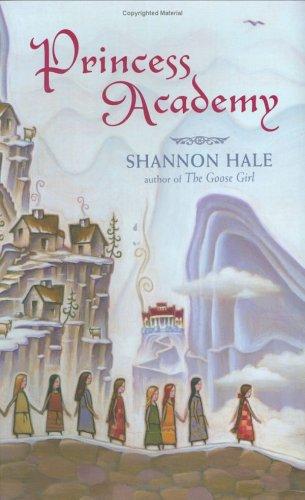
I've never read any Trixie Belden books, but I think if I owned this one as a kid, I would have hidden it in the attic. Why is Trixie wearing a severed head on her hand like a puppet? I always suspected Nancy Drew had a bit of a dark side, but Trixie, you're, like, twelve years old! In all seriousness though, I probably would have read the book just to figure out what the heck was going on. I am always fascinated by book cover art. I'm particularily interested in the differences between the US/Canadian/UK versions of books. Or when a book wins a medal and they change the cover to supposedly appeal to the masses. Case in point: Shannon Hale books. The original cover (illustrated one) for Princess Academy is so much more representative of the story, in my opinion. What do you think?
-Erica
Sassy Mag Lives
Sassy, for those who've never read it (and it's long defunct), was like a big, bad, sarcastic older sister to all the other goody-goody teen mags (Seventeen, I'm looking at you). Sassy introduced me to bands and musicians like Sonic Youth, Dinosaur Jr., Juliana Hatfield, and Liz Phair, and frequently published candid articles about sex, drugs, and rock 'n' roll.
But the very thing that made Sassy so great, eventually led to the magazine's demise. A group of angry mothers killed Sassy. Not happy with the magazine's content ("How dare you try and inspire our daughters to be independent-minded, informed young women!"), the mothers started an advertising boycott. They wrote to all of Sassy's major advertising clients and asked them to boycott the publication. And, as you can imagine, it didn't take long for things to go south.
Sassy folded in 1996, and, since then, my heart has longed for another magazine to come along and fill it's stylish combat boots. Bust has been a worthy seatwarmer for a few years now, but it's more of a young women's (20+) Sassy and lacks some of the tongue-in-cheek charm of it's predecessor, though it definitely is a topnotch magazine.
Anyway, let's skip to the happy ending. Through a recent article in Bust magazine, I discovered that 16-year -old fashion blogger Tavi Gevinson, with the help of a few others including Jane Pratt (!) and Ira Glass (!), have created an online magazine called Rookie that effectively blows my mind. It's everything Sassy was and more. Tavi, thanks for loving Sassy even though you were not born before the last issue rolled. You have made my world a better place.
And...just to send me right over the edge of happiness, Rookie has a book coming out this fall. It's a collection of the best of the magazine's first year.
-Erica
Monday, February 13, 2012
In Defence of Romance
Rhymes with Cupid
by Anna Humphrey is the story of Elyse: a seventeen-year-old employee
of Goodman’s Gifts and Stationery with a beyond-her-years jaded attitude
towards romantic love, and a passionate dislike for Valentine’s Day and
all of its associations. After a particularly bad breakup the year
before, Elyse just wants to make it through Valentine’s Day with her
head down and her spirits relatively unscathed.Enter Patrick, Elyse’s next door neighbour, secret admirer, and indomitable flirt. Elyse tries her darnedest to deflect his advances, but gradually begins to realize that Patrick may really be the good guy that he seems to be. As in “what you see is what you get,” and “yes, there really are good guys out there.” Remember Darcy from Pride and Prejudice? Good guy, just some trouble with sharing his feelings. Lloyd Dobler from Say Anything is another good example. He’s cool enough without you, but you’re still worth his time. Patrick Verona from Ten Things I Hate about You turns out all right in the end. And Cyrano de Bergerac has all the right words, if not the confidence to speak them himself.
![]() |
-Erica
Wednesday, January 18, 2012
The fault, dear Brutus, is not in our stars...
| John Green, with misplaced manuscript |
Thursday, November 10, 2011
*Wonderstruck* giveaway!
Ever since his mom died, Ben feels lost. At home with her father, Rose feels alone.
He is searching for someone, but he is not sure who.
She is searching for something, but she is not sure what.
When Ben finds a mysterious clue hidden in his mom's room,
When a tempting opportunity presents itself to Rose,
Both children risk everything to find what's missing.
With over 460 pages of original drawings and playing with the form he invented in his trailblazing debut novel, The Invention of Hugo Cabret, Brian Selznick once again sails into uncharted territory and takes readers on an awe-inspiring journey. Rich, complex, affecting, and beautiful, Wonderstruck is a stunning achievement from a uniquely gifted artist and visionary.
Wednesday, November 2, 2011
Friday, October 21, 2011
An Interview with Goliath Author Scott Westerfeld!
I LOVE all things steampunk. And I LOVE anything by Scott Westerfeld. So when I laid my hands on Leviathan, the first of his steampunk-inspired, totally amazing series in the fall of 2009, I was smitten. Behemoth came out next, and this fall the conclusion to the series arrived in our little bookstore to much fanfare (mostly from me). Scoot over here to see my review of Goliath to get a feel of what this series is all about.
The good folks at Simon and Schuster Canada set me up with an interview with Scott Westerfeld and his thoughtful answers are reproduced below. It seems much more steampunk to use last names only so Scott is "Mr. Westerfeld", and I will be, um... "Mrs. Sommerfield -Smith" (oh, why not?) So, as they say, tie up your dirigible and stay awhile!
Mrs. Sommerfield-Smith: You’ve done an amazing job of creating a fascinating alternate WWI history in the Leviathan series. You create some great “what if” scenarios and divisions (Clankers vs. Darwinists, boys vs. girls (!)). In your afterword to Leviathan you mention that “the nature of steampunk is blending future and past” and that your series “is as much about possible futures as alternate pasts.” Could you elaborate on this?
Mr. Westerfeld: Steampunk is about messing with history, Victorian history in particular. It's about bringing a flame-thrower to a tea party, while still wearing an appropriate silk cravat. So it's not just a mix of future and past, but of refinement and mayhem.
Mrs. Sommerfield-Smith: Why did you decide to give these novels a steampunk aesthetic? Where did you first encounter steampunk?
Mr. Westerfeld: My first steampunk experience was at Disney World. I was about eight years old, and went on the 20,000 Leagues Under the Sea ride. Something about a nuclear submarine with a pipe organ and baroque stylings really clicked with me. It's that strange mix of technologies and time periods that make certain people love steampunk.
Mrs. Sommerfield-Smith: I’ve noticed steampunk appearing more and more in literature, but also movies and television. Neil Gaiman recently wrote an episode of Doctor Who that had a decidedly steampunk feel. Are there any TV shows with a steampunk look/philosophy that have drawn your attention?
Mr. Westerfeld: I think the movie world (and more recently TV) likes the look and feel of steampunk, but doesn't know what to do with its broader themes yet. Steampunk is about rewriting history, in effect, pushing back the constraints that society placed on people because of their gender or beliefs or who their parents were. And there has yet to be a TV version of steampunk that addresses that larger project. I will admit that I grew up with The Wild, Wild West, however, and that I desperately wanted my own personal gizmo-filled train car.
Mrs. Sommerfield-Smith: In addition to your extremely successful YA series’ you’ve written five science fiction novels for adults. Why did you decide to write for young adults? What are the particular merits of writing for this audience?
Mr. Westerfeld: Teenagers are voracious readers, they send more and better fan mail, and they aren't as limited in their genre choices as adults. But I think the coolest thing about them is how engaged with language they are. At any given moment, more teenagers than adults are studying a foreign language, writing poetry, memorizing song lyrics, and making up slang. Teens are still acquiring language to some extent, and thus they take more joy and interest in the way novels play with words. As a writer who likes to generate slang and other kinds of neologisms, I find them a much more engaged and exciting audience with which to communicate.
Mrs. Sommerfield-Smith: Keith Thompson’s illustrations in the three novels are stunning. I love it when books are illustrated with black and white illustrations. At any time did you and Keith Thompson work together to come up with a “look” for the illustrations, or were writing and illustrating two separate endeavours?
Mr. Westerfeld: I would send Keith first drafts of three or four chapters at a time, and he would respond very quickly with sketches, so we were bouncing back and forth from the beginning. Often I would rewrite based on his illustrations, because I soon found that he was a better engineer than me, and sometimes a better researcher as well. So at times I would be quite general, "Something's going to chase in them in a couple of chapters. Could you draw something fast?" and then let my writing follow his art.
Mrs. Sommerfield-Smith: The internet, do you love it or hate it? Does it help or hinder you as a writer? Are there benefits and/or pitfalls to having a presence online while being an active writer?
Mr. Westerfeld: I think being in touch with readers is a great experience. Teens are wonderfully frank about what they like and dislike in my fiction, which is a really great kind of feedback to get. But the best thing about the internet is the way that teens engage each other, forming communities of readers. And these communities spread outward from the books to the wider world, as with the Harry Potter Alliance and its charitable works. A love of books has always been a way for like-minded people to find each other, and the internet has only made that project more vast and wonderful.
Mrs. Sommerfield-Smith: Your series, Uglies, has a brilliant new sci-fi take on that old (teenage) chestnut: “Be yourself”. In Leviathan, Deryn disguises herself as a boy to join the British Air Force and must be careful not to let her secret slip. I like the fact that you’ve drawn Deryn as an independent, strong-willed young woman, but she’s also not without insecurities and prejudices. What is so unique about this time in a child’s life when they are coming-of-age, and why is it such a fascinating theme to write (and read!) about?
Mr. Westerfeld: I agree that the theme of teenage fiction is Identity. Young people are still figuring out who they are, after all. (Everyone is, really, but teenagers are better at admitting it.) Because the teenage years are filled with epic firsts—first love, first betrayal, first true loss—it's a tremendously dramatic time to write about.
Mrs. Sommerfield-Smith: I like the way the adults in this novel, particularly Dr. Nora Barlow, seem to be positive influences on Deryn and Alek. Was this a conscious choice?
Mr. Westerfeld:I think Barlow and Volger have both positive and negative aspects. They provide a lot of good advice to their young charges, but their overall worldview is one of conflict and competition. Deryn and Alek, on the other hand, are learning the importance of working together across lines of ideology and class. So it's up to my younger characters to separate the good from the bad when it comes to their elders' example and counsel.
Mrs. Sommerfield-Smith: And do you categorize, if you could categorize your books at all, as speculative fiction? If so, what are the freedoms of writing in this genre? Are there any limitations? If not, what sets your books outside the categorization of speculative fiction?
Mr. Westerfeld: I'm lucky in writing for young adults, in that my books don't get categorized as much. I've written science fiction, fantasy, contemporary realism, and now steampunk, and yet all my books can sit happily together in the teen section of the bookstore. And that's all us writers can really ask for, that our books be findable! All the rest of it is for the critics to worry about.